
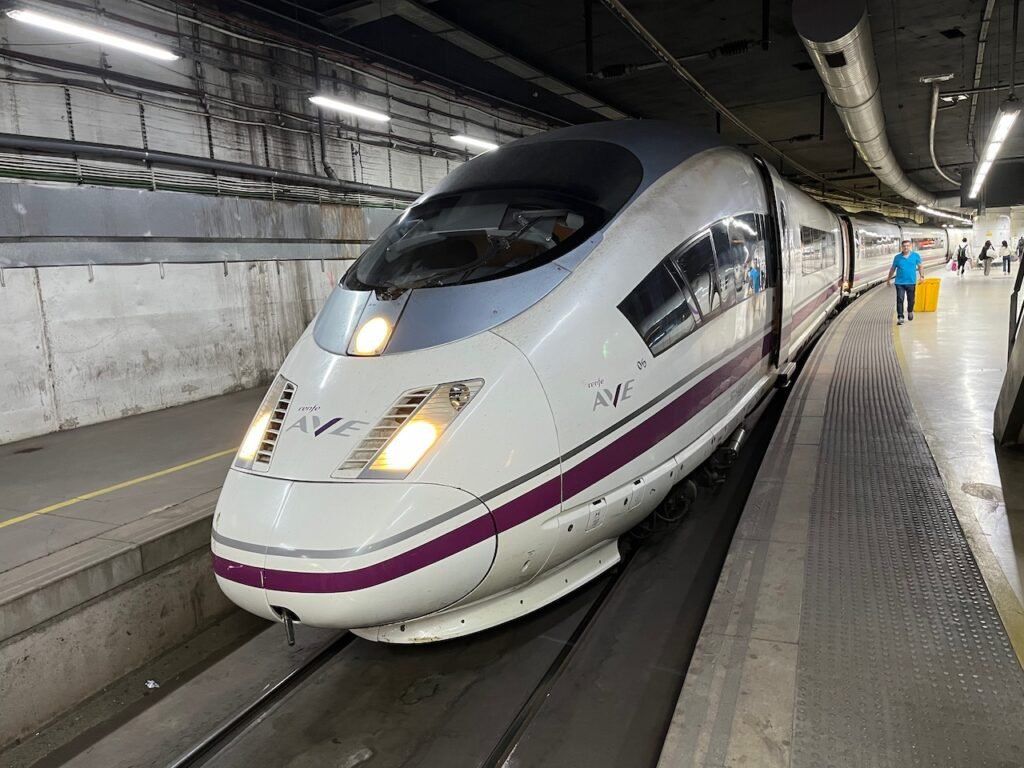
Spain’s Thursday Rail Strike Is Called Off — but Drivers Still Walk Out on Monday
Spain’s trains will run normally today. The 24-hour strike by Adif traffic controllers that was due to bring the network to a standstill on Thursday 19 November has been called off, after the infrastructure manager accepted the controllers’ demands in full.
The Sindicato de Circulación Ferroviario (SCF), the union for the staff who direct train movements, announced on the evening of Tuesday 17 November that it was withdrawing the strike — its notice 38 — following a meeting between the Renfe and Adif works councils and the Transport Ministry. Adif has agreed to reinforce staffing at traffic control centres, regulate working hours and cap continuous traffic control at two hours, followed by a break of at least 30 minutes. It will also draw up a document within 30 days setting a maximum number of tasks for controllers on high-speed lines, and amend the working rules the union had contested.
The call-off is a relief for passengers after a bruising Tuesday. The nationwide rail strike on 17 November left about 666,000 commuter and regional passengers affected, according to Renfe’s own figures. The government’s minimum services did not hold: 43.9 per cent of the Cercanías Madrid trains that should have run were cancelled over the day — 97.6 per cent of them up to 10:30, when the network was practically at a standstill — and 41 per cent of Rodalies trains in Catalonia. On high-speed and long-distance services, 14.5 per cent of the guaranteed trains were cancelled, and another 5.1 per cent ran only part of their route. More than half of the Avant shuttle trains were cancelled.
The dispute behind the strikes is about safety, staffing and infrastructure maintenance, after the crashes at Adamuz in Córdoba province in January, in which 45 people died, and at Urda in Toledo province in October, in which 69 people died.
But the wider rail dispute is not over. SEMAF, the train drivers’ union, rejected the settlement reached on Tuesday and has confirmed its own 24-hour strike for Monday 23 November. It covers drivers at Renfe, Iryo, Ouigo and five freight operators, and it was originally planned for Thursday 12 November before the union moved it. Minimum services for Monday have not yet been published. On the last drivers’ strike day, 10 November, about nine in ten Cercanías Madrid trains were cancelled, so Monday could be another difficult day.
There is also disruption further ahead. The CCOO union has confirmed a 48-hour strike in road freight and passenger bus transport on 23 and 24 December, over early retirement for professional drivers, after mediation ended without agreement on Wednesday. And the Madrid–Andalusia high-speed line is still running a reduced timetable after the Urda crash, with Renfe’s ticket sales on the corridor frozen through 13 December and special conventional trains between Madrid, Ciudad Real and Puertollano adding about 90 minutes to the journey.
What to do
Travelling by train in Spain today? Trains are running normally, and no rail strike is in force. For Monday 23 November, check your train in the Renfe app or on the Renfe website before leaving, and do the same with Iryo or Ouigo if you are travelling with them. Minimum services are usually published a few days before a strike day. Passengers with tickets on cancelled trains can get a full refund or a free rebooking from their operator.
Sources: SCF notice 38; Demócrata; Catalunya Info; Renfe; Spain’s Ministry of Transport and Sustainable Mobility; CCOO.


Pingback: Spain Rail Strike 17 November: Minimum Services Published — What Runs - StrikeWatch
Pingback: Spain's Rail Strike: Minimum Services Failed as Madrid Commuters Were Left Stranded - StrikeWatch
Pingback: Spain's Rail Strike Is Under Way: A Third of High-Speed Trains Cancelled - StrikeWatch