
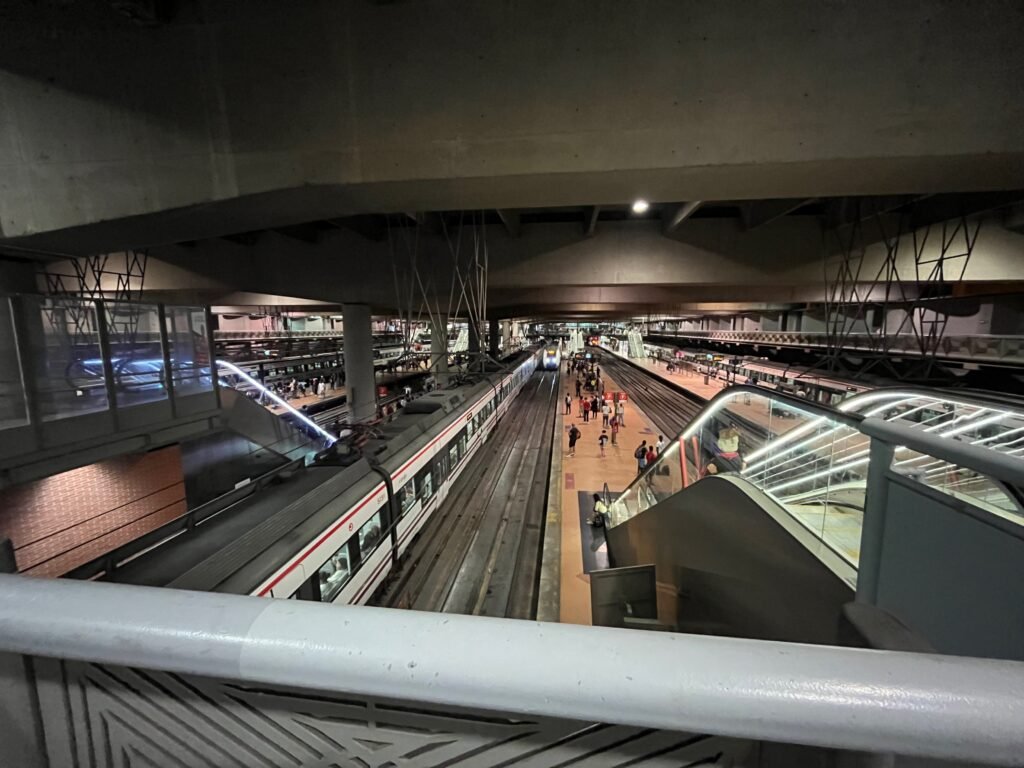
Spain’s Rail Strike: Minimum Services Failed as Madrid Commuters Were Left Stranded
Spain’s nationwide rail strike is over, but the official minimum services did not hold. In Madrid, commuter trains all but stopped in the morning, and hundreds of thousands of passengers were left stranded — despite a government order that was supposed to keep most trains running.
The 24-hour strike ran from midnight to 23:59 on Tuesday 17 November, called by the general works councils of Renfe and the infrastructure manager Adif, backed by CCOO, UGT, CGT, the Sindicato Ferroviario and the traffic controllers’ union SCF, with the drivers’ union SEMAF calling out drivers at Renfe, Iryo, Ouigo and five freight operators. The dispute is about safety, infrastructure maintenance and staffing after the crashes at Adamuz in Córdoba province in January, in which 46 people died, and at Urda in Toledo province in October, in which 68 people died.
The Transport Ministry’s minimum-services resolution, dated 12 November, required Renfe to run 72 per cent of high-speed and long-distance trains, 65 per cent of Media Distancia regional trains and 75 per cent of Cercanías commuter trains at peak times. But Renfe’s own figures, published at 18:00 on the day, show the floor was not met. On Cercanías Madrid, 43.9 per cent of the trains that should have run as minimum services were cancelled over the day — and in the morning the network was practically at a standstill, with 97.6 per cent of them cancelled up to 10:30. Service recovered in the afternoon. On Rodalies in Catalonia, 41 per cent of the guaranteed trains were cancelled.
Long-distance services fared better but still fell short: 14.5 per cent of the guaranteed AVE and long-distance trains were cancelled, and another 5.1 per cent ran only part of their route. More than half of the Avant shuttle trains were cancelled. Renfe counted about 666,000 commuter and regional passengers affected, and put turnout among its own staff at 16.75 per cent — 12.4 per cent on the morning shift and 25.9 per cent in the afternoon.
This was not a surprise. On the last drivers’ strike day, 10 November, the minimums were not met either, and about nine in ten Cercanías Madrid trains were cancelled. A minimum service is a floor for the network as a whole, not a promise that your train runs.
Nor is this the end of it. Adif’s traffic controllers, the SCF, strike for 24 hours on Thursday 19 November, and SEMAF drivers strike again on Monday 23 November. Passengers with tickets on cancelled trains can get a full refund or a free rebooking from Renfe, Iryo or Ouigo. One small piece of good news: Ouigo’s planned walkouts on 4 and 8 December were called off after an agreement on 5 November.
Travellers should also note that the Madrid–Andalusia high-speed line is still running a reduced timetable after the Urda crash, with recovery works scheduled into early 2027. Renfe has frozen ticket sales on the corridor through 13 December and runs special conventional trains between Madrid, Ciudad Real and Puertollano that add about 90 minutes to the journey.
What to do
Travelling by train in Spain this week? Check your train in the Renfe app or on the Renfe website before leaving for the station — and do the same on the Ouigo or Iryo site if you booked with them. If your train is cancelled, Renfe offers free changes and cancellations, and Ouigo and Iryo have emailed passengers on cancelled trains. If you must travel on Thursday or next Monday, check again then: the Adif strike and the drivers’ strike are separate actions with their own timetables. And do not rely on the last train that would make a flight or ferry connection.
Sources: Renfe; Spain’s Ministry of Transport and Sustainable Mobility; Strike Tracker; Demócrata; Travel and Tour World.
UPDATE — Thursday 19 November: the Adif traffic controllers’ strike planned for today has been called off. The SCF union withdrew it on the evening of Tuesday 17 November after Adif accepted its demands in full, including a two-hour cap on continuous traffic control followed by a 30-minute break. Trains are running normally today. The wider rail dispute is not over: SEMAF drivers still strike for 24 hours on Monday 23 November. Read our full report on the call-off.


Pingback: Spain's Rail Strike Is Under Way: a Third of High-Speed Trains Cancelled - StrikeWatch