
Spain’s General Strike on Wednesday: What Will Run and What Won’t
UPDATE — Thursday 12 November: the general strike is over. Aena counted at least 332 cancelled flights on Wednesday — about 7% of the day’s 4,529 — and Renfe said about a quarter of its high-speed and long-distance trains were cancelled. Flights are back to normal today, though Storm Charles is still causing a handful of cancellations in the Canary Islands. And the rail dispute moves on: today’s train drivers’ stoppages were moved to Monday 23 November, while a sector-wide rail strike is still planned for Tuesday 17 November. Read our full report on the day after the strike.
UPDATE — Wednesday 11 November: the general strike is under way today, and Storm Charles has arrived on the same day, with heavy rain and gusts of up to around 75 mph, and Spain’s weather service Aemet calling Wednesday the worst day. Tuesday’s Renfe drivers’ strike also ran thinner than the promised minimum services in the morning. Read our full report on the strike as it happens today.
UPDATE — Tuesday 10 November: the ministry’s order sets the minimum flight share airport by airport. At Madrid-Barajas, 78% of flights to the islands and other protected routes must run, along with 57% of international and long domestic flights and 32% of short mainland hops. At Barcelona-El Prat, the figures are 79%, 56% and 34%. Ouigo plans to run 18 of its 26 services and Iryo 32 of its 44 trains. Iberia says passengers booked on 11 November flights operated by Iberia, Iberia Express or Air Nostrum can move their travel to a date through 26 November or request a refund as a voucher or to the original payment method. Airlines are expected to publish their cancellation lists today and tomorrow — check your airline’s app before you travel.
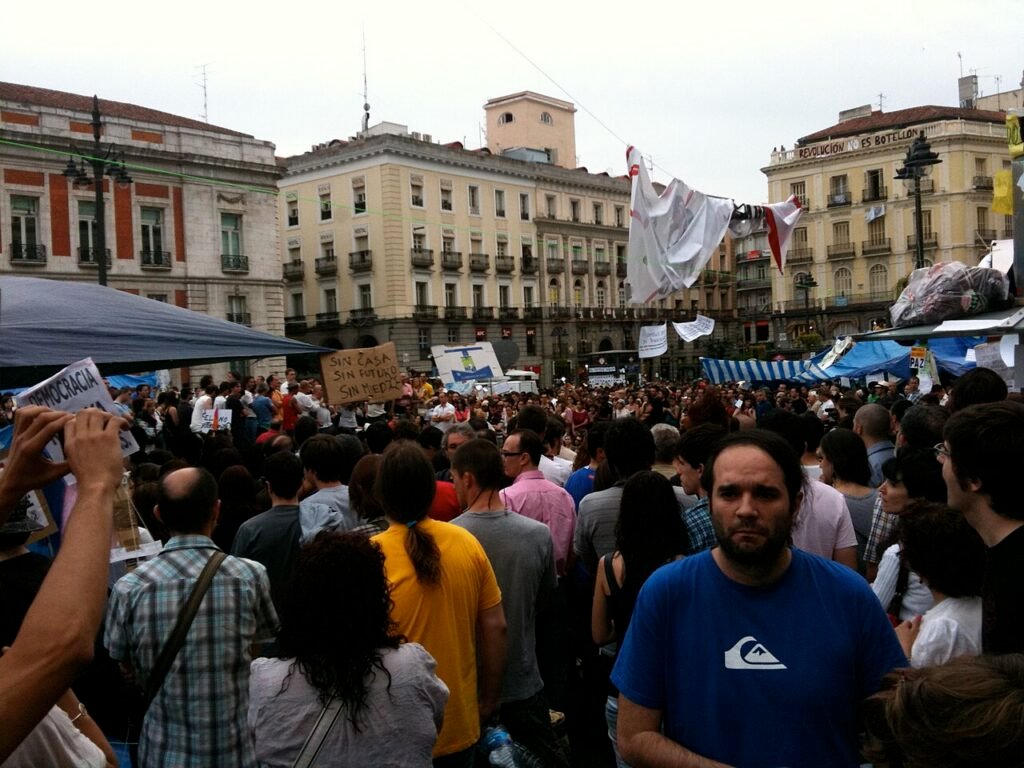
Spain stops on Wednesday 11 November. The country’s two biggest unions, CCOO and UGT, have called a 24-hour general strike — the first joint one since 2012 — over wages, housing costs and living standards. It runs from midnight to midnight, across every sector, including the Balearic and Canary Islands. The government has now published the minimum services that decide what keeps moving. Here is what they mean for travellers.
Flights: just over half protected. The Transport Ministry’s minimum-services order, signed on 6 November, protects only a little over half of international flights at the main airports: 57% at Madrid-Barajas and Málaga, 56% at Barcelona and 53% at Palma. Airlines may cancel a large share of the rest, so check with your airline before you travel — and Iberia has now published a strike advisory for Wednesday’s flights (see the update above). Flights to and from the Balearic and Canary Islands are better protected, at around 70%. Emergency flights, police-escorted flights and flights carrying mail or perishable goods run at 100%. The US Embassy in Madrid has issued an alert to its citizens about the strike.
Trains and city transport: the middle day of three. Wednesday sits between two Renfe drivers’ strikes — a full-day stoppage on Tuesday 10 November and partial stoppages on Thursday 12 November. For those two days, the ministry requires 72% of AVE high-speed and long-distance trains, 65% of Media Distancia regional services, 75% of Cercanías commuter trains at peak times and 50% at other times, and 20% of freight. On Wednesday itself, the general strike reaches every sector. In Catalonia, local trains, metro and buses must run only 25% of services, and only at peak times (06:30–09:30 and 16:30–21:00). In other cities, metros and buses run on minimum services set by their regions and city councils. Large marches are planned in Madrid and Barcelona and may close roads in the city centres.
Why it is happening. The unions want higher wages, affordable housing and price controls. The strike falls two days before the official campaign opens for a snap general election on 29 November. The Renfe drivers’ strikes are separate: their union, SEMAF, says the safety commitments agreed after the crash near Urda on 28 October, in which 69 people died, have not been kept. SEMAF met acting transport minister Carlos Cuerpo on 5 November, but the meeting ended without progress.
What to do if you are travelling
Avoid travelling on Wednesday 11 November if you can. If you cannot move your trip, check your flight and your train the day before, and again on the morning itself.
Allow much longer than usual for airport journeys, and expect delays even on services that do run.
In Catalonia, use the Rodalies minimum-service timetables on rodalies.gencat.cat rather than the normal timetable.
Renfe normally lets you change or cancel strike-affected tickets free of charge. Do it early, while seats on other trains remain.
Sources: Spain’s Ministry of Transport minimum-services order (signed 6 November 2026); Renfe minimum-services notice (7 November 2026); Generalitat de Catalunya order of 5 November 2026; SEMAF notices 2026-51 and 2026-52; US Embassy Madrid alert (6 November 2026); EFE reporting.


Pingback: Spain’s Three Strike Days — 10, 11 and 12 November